Showing posts with label BlackBerry. Show all posts

Wednesday, February 27, 2013

BlackBerry P 9981 Porsche Design

By specs-phones | At 4:51 PM | Label : | 1 Comments
BlackBerry P 9981 Porsche Design dengan warna hitam sebentar lagi akan hadir di Indonesia, HP satu ini memiliki design yang menarik, serba hitam dan lebih menekankan pada ikon serta esensi dari merek HP itu sendiri. BB P9981 ini rencana akan dipasarkan di Indonesia dengan Harga Rp 21.888.888, wah bukan nominal yang sedikit bukan?


Specs BB Porsche Design P 9981

General
2G Network               
GSM 850 / 900 / 1800 / 1900

3G Network            
HSDPA 850 / 1900 / 2100

Announced    
September 2011
Size
Dimensions
115 x 67 x 11.3 mm

Weight 
155 g
Display
Type          
TFT capacitive touchscreen, 16M colors

Size
                           640 x 480 pixels, 2.8 inches (~286 ppi pixel density)- QWERTY keyboard - Optical trackpad - Multi-touch input method - Accelerometer sensor for auto-rotate - Proximity sensor for auto turn-off

Sound
Alert Type                
Vibration; Polyphonic(64), MP3 ringtones

Speakerphone 
Yes
Memory
Phonebooks   
Practically unlimited entries and fields, Photocall

Call Records              
Yes

Internal
8 GB storage, 768 MB RAM

Call Slots                    
microSD, up to 32GB
Data
GPRS
Yes

EDGE  
Yes

3G    
HSDPA 14.4Mbps, HSUPA 5.76Mbps

WLAN 
Wi-Fi 802.11 b/g/n, dual-band

Bluetooth  
Yes, v2.1 with A2DP, EDR

Infrared Port              
No

USB                          
Yes, v2.1 with A2DP, EDR
Camera
Primary    
5 MP, 2592х1944 pixels, autofocus, LED flash

Features 
Geo-tagging, face detection, image stabilization

Video   
Yes, 720p

Secondary
No
Features
OS  
BlackBerry OS 7.0

CPU
1.2 GHz processor, Qualcomm MSM8655 chipset

Messaging
SMS(threaded view), MMS, Email, Push Email, IM

Browser 
HTML

Radio 
No
Battery
Overview 
Standard battery, Li-Ion 1000 mAh


Friday, January 11, 2013

Huawei Ascend D Quad and D Quad XL Wi-Fi Hotspot Setting: Step by Step Tutorial.

By specs-phones | At 12:15 AM | Label : , , , , , , , , , , | 0 Comments
Huawei Ascend D quad XL support 2G Network GSM 850 / 900 / 1800 / 1900 and 3G Network HSDPA 850 / 900 / 1700 / 1900 / 2100 network. It has Android OS, v4.0 (Ice Cream Sandwich). It has WLAN Wi-Fi 802.11 b/g/n, Wi-Fi hotspot, DLNA. Now I will show you that how can you connect your Huawei Ascend D Quad and D Quad XL withWi-Fi network using WiFiFinder Application. Now see my step by step tutorial.

Wi-Fi Finder requires phone call permission on the phone version as an easy way to call the public Wi-Fi location when viewing the detail view of a Wi-Fi hotspot. The app will NEVER make calls unless you explicitly click on the phone icon and confirm that you would like to call the Wi-Fi location.


Never worry again about not finding a Wi-Fi internet connection. Wi-Fi Finder is simply the best app for finding free or paid public Wi-Fi hotspots online or offline—perfect for Skype users on the go!

Step 1: Scan Wi-Fi hotspots
Scan for Wi-Fi hotspots around you for connect your Huawei Ascend D Quad and D Quad XL with Wi-Fi Hotspot.

Step 2: Search Public Wi-Fi

You can search for public Wi-Fi anywhere in the world for this version of the Huaweimobile phone.


Step 3: Wi-Fi Hotspot Detail 
You can see Wi-Fi hotspot detail, call location of the user directions and you can also share the share the hotspot


Step 4: Filter Wi-Fi Hotspot Locations
You can filter your Wi-Fi Hotspot searching results by location such as café or hotel etc or provider type. You can filter the locations.


Step 5: Wi-Fi Works both Online and Offline
You can set your Huawei Ascend D Quad and D Quad XL working mode. It can work both online and offline mode.


In this way you can connect your Huawei Ascend D Quad and D Quad XL with Wi-Fi network using WiFi Finder Application.

How to Change Symbian S60V3 Default Menu Indicators Style: Read My Step By Step Tutorial.

By specs-phones | At 12:11 AM | Label : , , , , , , , , , , | 2 Comments
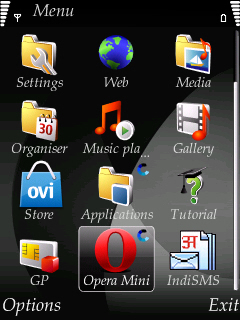
How are you? Today I will show you how to change the default menu of indicators ofSymbian S60V3. When you run an application in Symbian mobile and minimize the application during running process then which icon or sign of the application you see is called the menu indicator? For example in the application folder of my mobile I open one application and opera mini this two application. 


See the Application and the opera mini symbol is same. This is menu indicator. Now see when I change this indicator of my Symbian S60V3 Default Menu then how it looks like. For better understanding I provide the image below: Symbian S60V3 Default Menu Indicators Style 1.


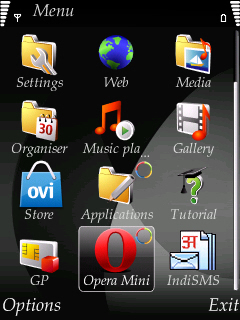
Symbian S60V3 Default Menu Indicators Style 2:


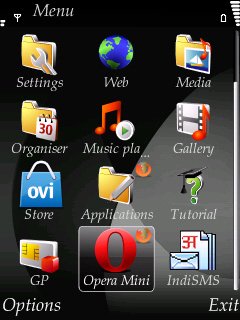
Symbian S60V3 Default Menu Indicators Style 3:


When you change the menu indication then the icon of some application and folder also is changed. If you want to change the indicator of your Symbian S60V3 default menu then follow my steps.


Step 1: Create a folder named Patches in the memory card of the mobile. Open C drive with Xplore. Now copy Open4All RP+ from Patches folder and paste it in the Patches folder in the memory card.


Step 2: Now copy c2z Patch and paste it in the Patches folder of the memory card.


Step 3: Now open Rom Patcher and add the two patches just click Add to auto and then click apply.


Step 4: Now download the menu indication zip file from HERE and unzip it. You can see 26 zip files here. Now which menu indicators you like unzip it.


Step 5: After unzip we see a file named menu.mif. Now copy menu.mif with Xplore and paste it in C: -> resource -> apps.


Step 6: Now close Xplore and restart your mobile then you can see you’re default menu indicator will change.


Thanks for reading my blog. If you have any query please post your comment and share your experiences with us.

Monday, January 7, 2013

BlackBerry Curve 9315 : Full Features Specification With User Review.

By specs-phones | At 8:45 PM | Label : | 2 Comments
RIM and T-Mobile USA have announced the BlackBerry Curve 9315, a QWERTY smartphone with 3G connectivity. T-Mobile and RIM refer to Curve 9315 as "T-Mobile's most affordable BlackBerry," as it costs only $49.99, but it also requires 20 equal monthly payments of $10 per month with a two-year T-Mobile Value voice and data plan, which brings the total cost of the device to the not-so-puny $250.


Features
BlackBerry Curve 9315
Screen Resolution
320x240
Camera
2 Megapixel
RAM
512MB on-board storage.
MicroSD Card
Yes, Support microSD memory cards (up to 32GB)
FM Radio
Yes
Wi-Fi
Yes
Hotspot
Yes
3G/2G Connectivity
Yes
Release Date
January 23, 2013.
Operating System
BlackBerry OS 7.1
BBM Button
YES
Keypad
QWERTY
Display
2.44-inch non-touch display.
Video Capture
YES
Messenger Service
BlackBerry Messenger Service Button.
Price
Costs only $49.99


More Discussion About BlackBerry Curve 9315
Put all of that together, and you get a deal that doesn't sound very enticing. The Curve 9315 is basically a rebranded-for-T-Mobile Curve 9310. It runs on BlackBerry OS 7.1, an operating system that will become obsolete with the advent of BlackBerry 10, which is scheduled to arrive on Jan. 30 -- only seven days after the Curve 9315 becomes available.

Some Additional Features : BlackBerry Curve 9315

Talk time: 8.00 hours
Stand-by time: 18.0 days (432 hours)
Processor: Single core, 800 MHz
Music player Supported formats:MP3, AAC, FLAC, WMA, WAV, M4A (Apple lossless), MP4, AMR, 3GP, 3GPP, OGG, MIDI.
Browser:supports: HTML
Built-in online services support:Facebook, Twitter
UMTS: 1700/2100 MHz
Data: HSPA (unspecified), UMTS, EDGE, GPRS
Global Roaming: Yes
BlackBerry 9320 Features BBM Button
Research In Motion today added the BlackBerry Curve 9320 to its entry-level range of smartphones. It is a compact monoblock-style device with a full backlit QWERTY keyboard and a 2.44-inch non-touch display with 320 x 240 resolution. The 9320 runs BlackBerry OS 7.1 and features a dedicated hardware button for its popular BlackBerry Messenger service.

Other features include a 3.2-megapixel camera with video capture; Wifi, GPS, Bluetooth, and FM radios; 512MB of on-board storage and support for 32GB microSD cards. Though no U.S. carriers have announced plans to sell the 9320, it supports the 2G/3G networks of both AT&T and T-Mobile.

Review this BlackBerry Curve 9315 phone. Put your comments and say something about this phone.

http://tipsabc24.blogspot.com/2013_01_03_archive.html

Tips For Protect Your Google Alert,Facebook, Twitter, Gmail and Pay in Cash Privacy.

By specs-phones | At 8:40 PM | Label : , , , , , , , , , , | 0 Comments
Over the weekend, I wound up at Washington, D.C.’s Trapeze School with a group of friends. Before one of them headed up a ladder to attempt a somersault landing from the trapeze bar, she handed me her phone and asked me to take photos. “What’s the password?” I asked. “I don’t use one,” she replied. My jaw dropped as it often does when someone I know tells me they’re choosing not to take one of the very simplest steps for privacy protection, allowing anyone to snoop through their phone with the greatest of ease, to see whichever messages, photos, and sensitive apps they please.

So this post is for you, guy with no iPad password, and for you, girl who stays signed into Gmail on her boyfriend’s computer, and for you, person walking down the street having a loud conversation on your mobile phone about your recent doctor’s diagnosis of that rash thing you have. These are the really, really simple things you should be doing to keep casual intruders from invading your privacy.

1. Password protect your devices: your smartphone, your iPad, your computer, your tablet, etc. Some open bookers tell me it’s “annoying” to take two seconds to type in a password before they can use their phone. C’mon, folks. Choosing not to password protect these devices is the digital equivalent of leaving your home or car unlocked. If you’re lucky, no one will take advantage of the access. Or maybe the contents will be ravaged and your favorite speakers and/or secrets stolen. If you’re not paranoid enough, spend some time reading entries in Reddit Relationships, where many an Internet user goes to discuss issues of the heart. A good percentage of the entries start, “I know I shouldn’t have, but I peeked at my gf’s phone and read her text messages, and…”

2. Put a Google Alert on your name. This is an incredibly easy way to stay on top of what’s being said about you online. It takes less than a minute to do. Go here. Enter your name, and variations of your name, with quotation marks around it. Boom. You’re done.

3. Sign out of Facebook, Twitter, Gmail, etc. when you’re done with your emailing, social networking, tweeting, and other forms of time-wasting. Not only will this slightly reduce the amount of tracking of you as you surf the Web, this prevents someone who later sits down at your computer from loading one of these up and getting snoopy. If you’re using someone else’s or a public computer, this is especially important. Yes, people actually forget to do this, with terrible outcomes.

4. Don’t give out your email address, phone number, or zip code when asked.Obviously, if a sketchy dude in a bar asks for your phone number, you say no. But when the asker is a uniform-wearing employee at Best Buy, many a consumer hands over their digits when asked. Stores often use this info to help profile you and your purchase. You can say no. If you feel badly about it, just pretend the employee is the sketchy dude in the bar.

5. Encrypt your computer. The word “encrypt” may sound like a betrayal of the simplicity I promised in the headline, but this is actually quite easy to do, especially if you’re a MacHead. Encrypting your computer means that someone has to have your password (or encryption key) in order to peek at its contents should they get access to your hard drive. On a Mac, you just go to your settings, choose “Security and Privacy,” go to “FileVault,” choose the “Turn on FileVault” option. Boom goes the encryption dynamite. PC folk need to use Bitlocker.

6. Gmailers, turn on 2-step authentication in Gmail. The biggest takeaway from the epic hack of Wired’s Mat Honan was that it probably wouldn’t have happened if he’d turned on “2-step verification” in Gmail. This simple little step turns your phone into a security fob — in order for your Gmail account to be accessed from a new device, a person (hopefully you) needs a code that’s sent to your phone. This means that even if someone gets your password somehow, they won’t be able to use it to sign into your account from a strange computer. Google says that millions of people use this tool, and that “thousands more enroll each day.” Be one of those people. The downside: It’s annoying if your phone battery dies or if you’re traveling abroad. The upside: you can print a piece of paper to take with you, says James Fallows at the Atlantic. Alternately, you can turn it off when you’re going to be abroad or phone-less. Or you can leave it permanently turned off, and increase your risk of getting epically hacked. Decision’s yours.

7. Pay in cash for embarrassing items. Don’t want a purchase to be easily tracked back to you? You’ve seen the movies! Use cash. One data mining CEO says this is how he pays for hamburgers and junk food these days.

8. Change Your Facebook settings to “Friends Only.” You’d think with the many Facebook privacy stories over the years that everyone would have their accounts locked down and boarded up like Florida houses before a hurricane. Not so. There are still plenty of Facebookers that are as exposed on the platform as Katy Perry at a water park. Visit your Facebook privacy settings. Make sure this “default privacy” setting isn’t set to public, and if it’s set to “Custom,” make sure you know and are comfortable with any “Networks” you’re sharing with.

9. Clear your browser history and cookies on a regular basis. When’s the last time you did that? If you just shrugged, consider changing your browser settings so that this is automatically cleared every session. Go to the “privacy” setting in your Browser’s “Options.” Tell it to “never remember your history.” This will reduce the amount you’re tracked online. Consider a browser add-on like TACO to further reduce tracking of your online behavior.

10. Use an IP masker. When you visit a website, you leave a footprint behind in the form of IP information. If you want to visit someone’s blog without their necessarily knowing it’s you — say if you’re checking out a biz competitor, a love interest, or an ex — you should consider masking your computer’s fingerprint, which at the very least gives away your approximate location and service provider. A person looking at their analytics would notice me as a regular visitor from Washington, D.C. for example, and would probably even be able to tell that I was visiting from a Forbes network address. To hide this, you can download Tor or use an easy browser-based option.

These are some of the easiest things you can do to protect your privacy. Ignoring these is like sending your personal information out onto the trapeze without a safety net. It might do fine… or it could get ugly. These are simple tips for basic privacy; if you’re in a high-risk situation where you require privacy from malicious actors, check out EFF’s surveillance self-defense tips.

Sumber : http://tipsabc24.blogspot.com

Saturday, December 22, 2012

BlackBerry 4G LTE PlayBook Full Specification With User Review.

By specs-phones | At 11:44 PM | Label : | 0 Comments

BlackBerry 4G LTE PlayBook is a tablet which has no support for GSM voice communication, SMS, and MMS.The tablet upgrades the original BlackBerry PlayBook, boasting a 7-inch display, front and rear facing HD video cameras, HDMI-out, a 1.5GHz dual-core processor and 32GB of memory.

The only thing missing from the 4G LTE BlackBerry Playbook Tablet 2 launch is even the faintest hint of worldwide release date. Below see the full phone specification:

Particulars
Features
BlackBerry 4G LTE PlayBook

General
2G Network
3G Network
HSDPA 900 / 1700 / 1900 / 2100 / 800
4G Network
LTE 700 / 1700
Announced
Available. Released 2012, August

Body
Dimensions
194 x 130 x 10 mm
Weight
425 g

Display
Type
TFT capacitive touchscreen, 16M colors
Size
600 x 1024 pixels, 7.0 inches (~170 ppi pixel density)
Multi Touch
Yes


Sound
Alert types           
N/A
Loudspeaker
Yes, with stereo speakers
3.5mm jack
Yes

Memory
Card slot
No
Internal            
32 GB storage, 1 GB RAM


Data
GPRS
No
EDGE            
No
Speed
HSDPA, HSUPA, LTE
WLAN            
Wi-Fi 802.11 a/b/g/n
Bluetooth           
Yes, v2.1 with A2DP, EDR
USB   
Yes, microUSB v2.0


Camera
Primary
5 MP, 2592x1944 pixels, autofocus
Features
Geo-tagging
Video
Yes, 1080p
Secondary
Yes, 3 MP


Features
OS
BlackBerry Tablet OS v2.0
Chipset
CPU
Dual-core 1.5 GHz
Sensors
Accelerometer, gyro, compass
Messaging
Email, Push Email, IM
Browser
HTML5, Adobe Flash
Radio
No
GPS
Yes, with A-GPS support
Java
Yes
Colors
Black
- Active noise cancellation with dedicated mic
- Micro HDMI port
- Document viewer/editor
- BlackBerry Bridge
- Media player MP3/WMA/AAC+
- Video player DivX/WMV/XviD/3gp
- Organizer
- Predictive text input


Battery
Battery
Standard battery
Stand-by

Not Specified.
Talk time
Music play
Music

BlackBerry PlayBook 4G LTE hands-on
RIM's attempts to get a cellular-equipped version of the BlackBerry PlayBook have been troubled, to say the least.


The company signalled its intentions around Mobile World Congress last February, only to watch as carriers backed off -- partly as RIM focused its attention on LTE, and partly after carriers grew skittish over sales of the WiFi version. A year and a half later, we finally have an LTE version, and with a faster 1.5GHz processor to boot. But do 4G data and a processor bump make all the difference? And does the upgrade stand a realistic shot in a competitive field that has moved on since the original PlayBook? We'll find out in our hands-on.
Posting Lama ►
 

Visitor

Copyright © 2012. specs phones - All Rights Reserved B-Seo Versi 5 by Bamz my free template